It's not very often I get to say that I'm in Póo, but I am today :0)
This was a stage that started out well, got quite boring and ended extremely well. I'll explain:
Last night was enjoyable. Having showered and done the necessaries I returned to the bar to use the wifi. My efforts took me up to mealtime, so I shut down the laptop and went into the restaurant. I'd been told he offered a "pilgrim special" and was happy to accept whatever he offered. This turned out to be a good decision.
I chose Favelas Asturianas for starters - a dish of large white beans in a rich tomato sauce, with various cuts of meat added - such as strips of loin of pork, local black pudding and so forth. Main dish was Merluza a la Romana - fresh white fish in batter with salad. Wine was included.
Shortly after I sat down to eat two pilgrims entered. I'd passed them earlier in the day, and having chatted a bit we sat together for our meals. They were a young Polish couple from London, thus naturalised English. We chatted and ate and toook full advantage of the free wine!
I set out early the next morning. Now that the sun is rising slightly later each day I found a bar and had a coffee while I waited for daylight. I then set off around the town in the growing dawn and managed to see a fair number of these impressive houses that have been built throughout these coastal towns and which represent the wealth of the 19th century Spanish traders in central America.
I headed out of town on the footpaths, looking forward to a day of coastal views. About five or six kilometres into the walk I was directed down off the hillside route and onto the main road. The reasons soon became very clear: a new motorway. Oh dear!
While I understand that such constructions are somewhat inevitable, the contrast feels especially poignant when one is walking for hours each day. Suddenly there doesn't seem to be quite such a rush to get somewhere. So while I can accept that someone has identified a need for more motorway, it left me wondering - as I saw the huge scars into the sides of the mountains - quite why humankind seems so utterly bent on trashing every last piece of the natural world.
My walk had suddenly become more perfunctory than enjoyable. I walked alongside a busy main road for the next hour and a half before, mercifully, the camino then swung right into the small (but architecturally rich) village of Pendueles. An interesting church, an unexpectedly imposing crypt in the cemetery, and a badly decaying palace alongside further examples of the past wealth of this area. The palace in particular bore evidence of the great age of iron construction. Just as in the bridge at Portugalete, it seems that modern methods were quickly adopted for large buildings. Today there are the rusting remains of what was once a palace.
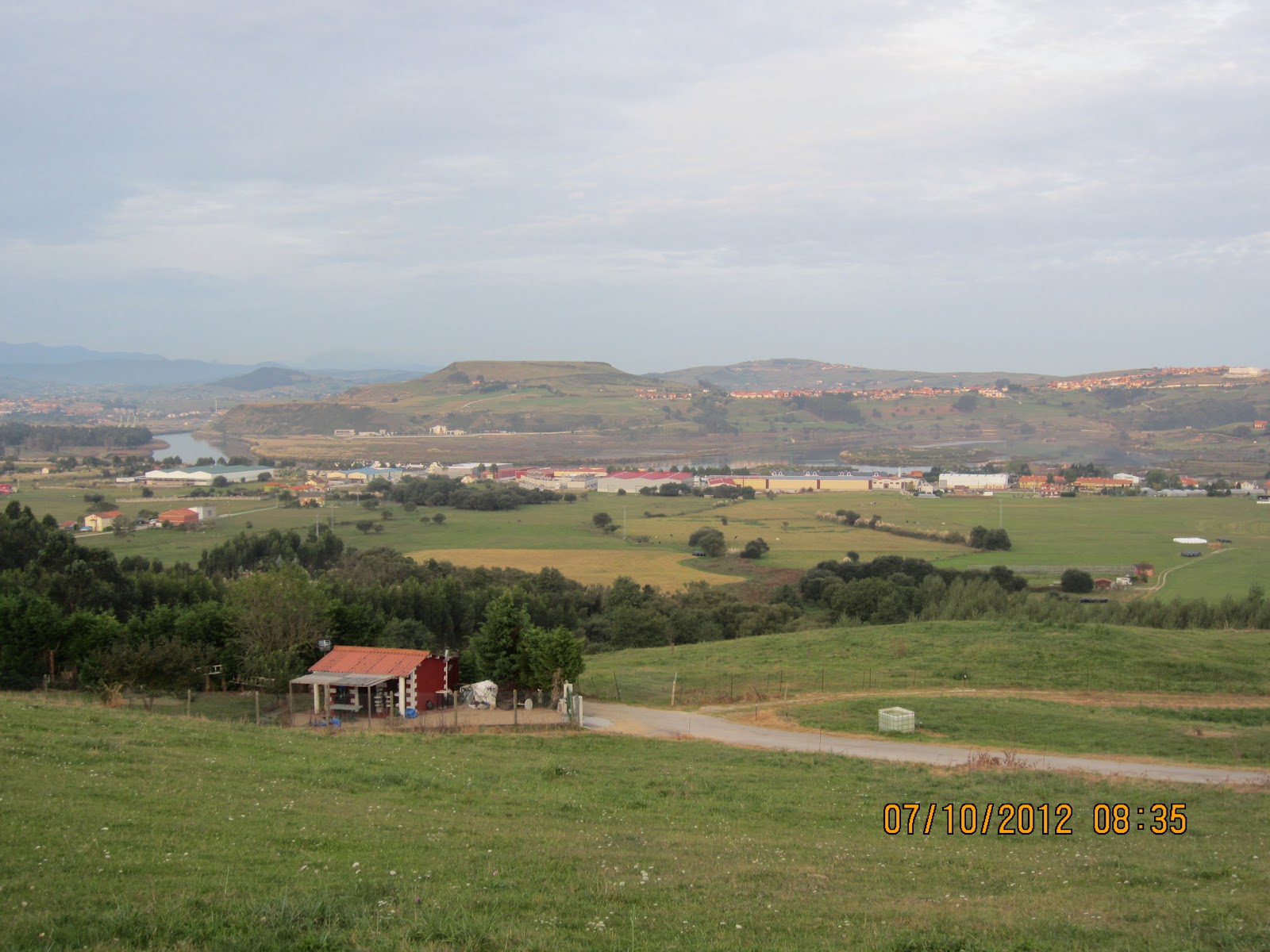
As I left the village and found the coastal path, that wandered up and down and along the pretty coastline, I bumped into Joost once more. He had stayed about 2km from Colombres in a private albergue. We walked together, enjoying the increasingly impressive views as we rose above the coast and could see the Bay of Biscay framed against the flanks of the Picos de Europa.
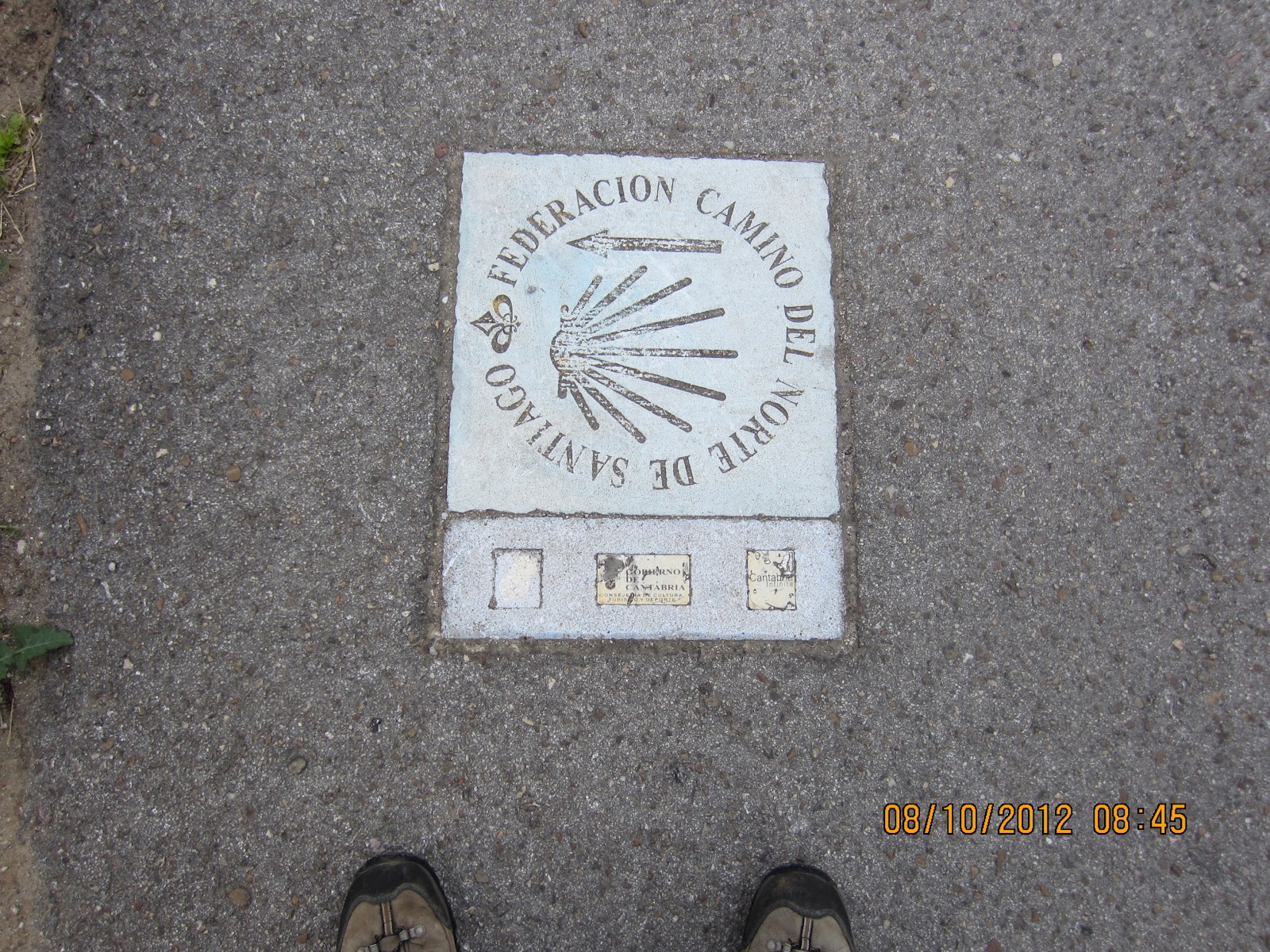
The camino was now following another GR graded footpath - the markings are identical to those in France. We wandered along the coast, the path climbing and descending. Llanes came into view, another beautiful setting for an historic town beside the sea. We walked past a golf course and as the path began its descent toards Llanes we passed the small chapel of Santo Christo del Camino.
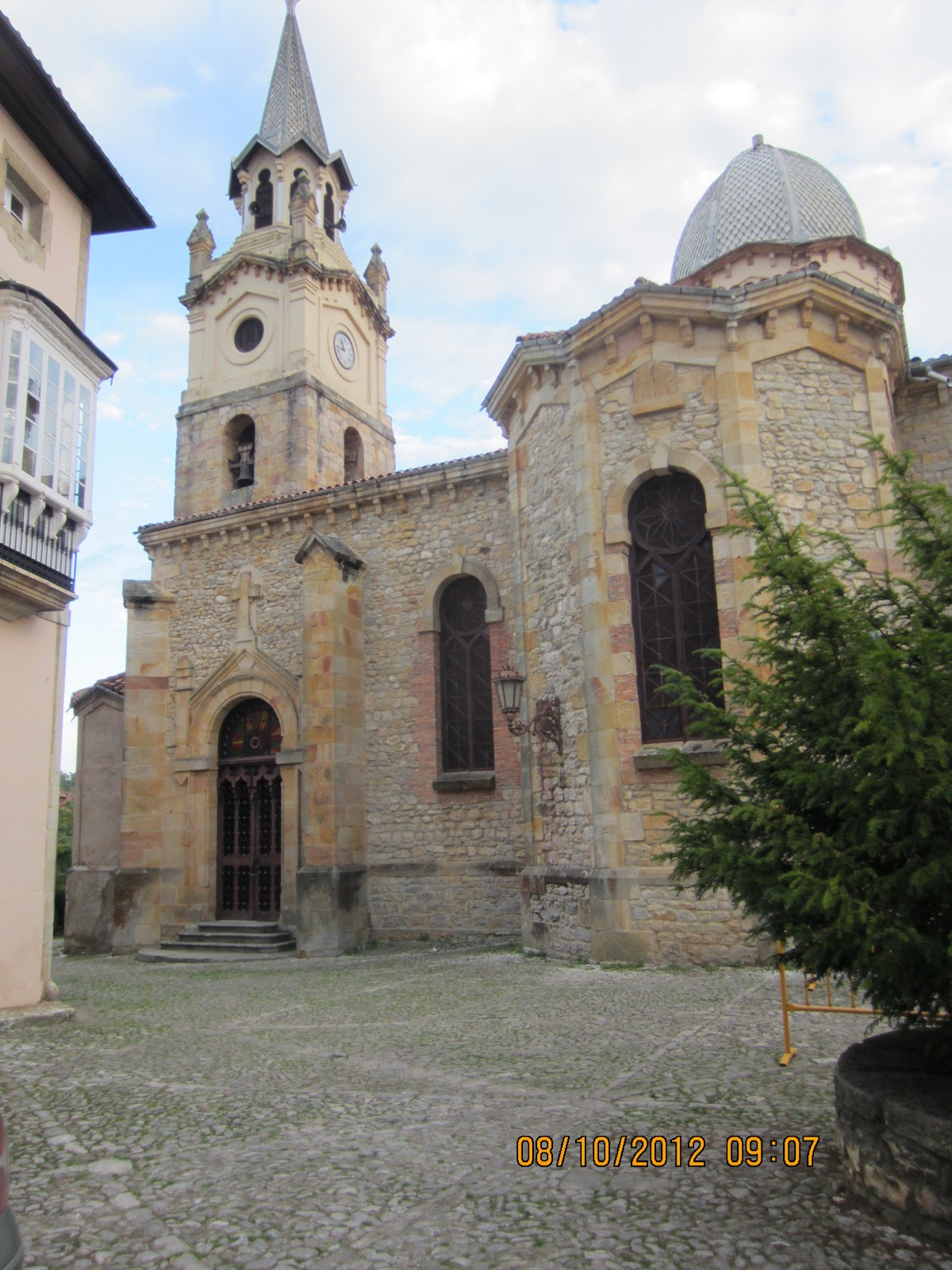
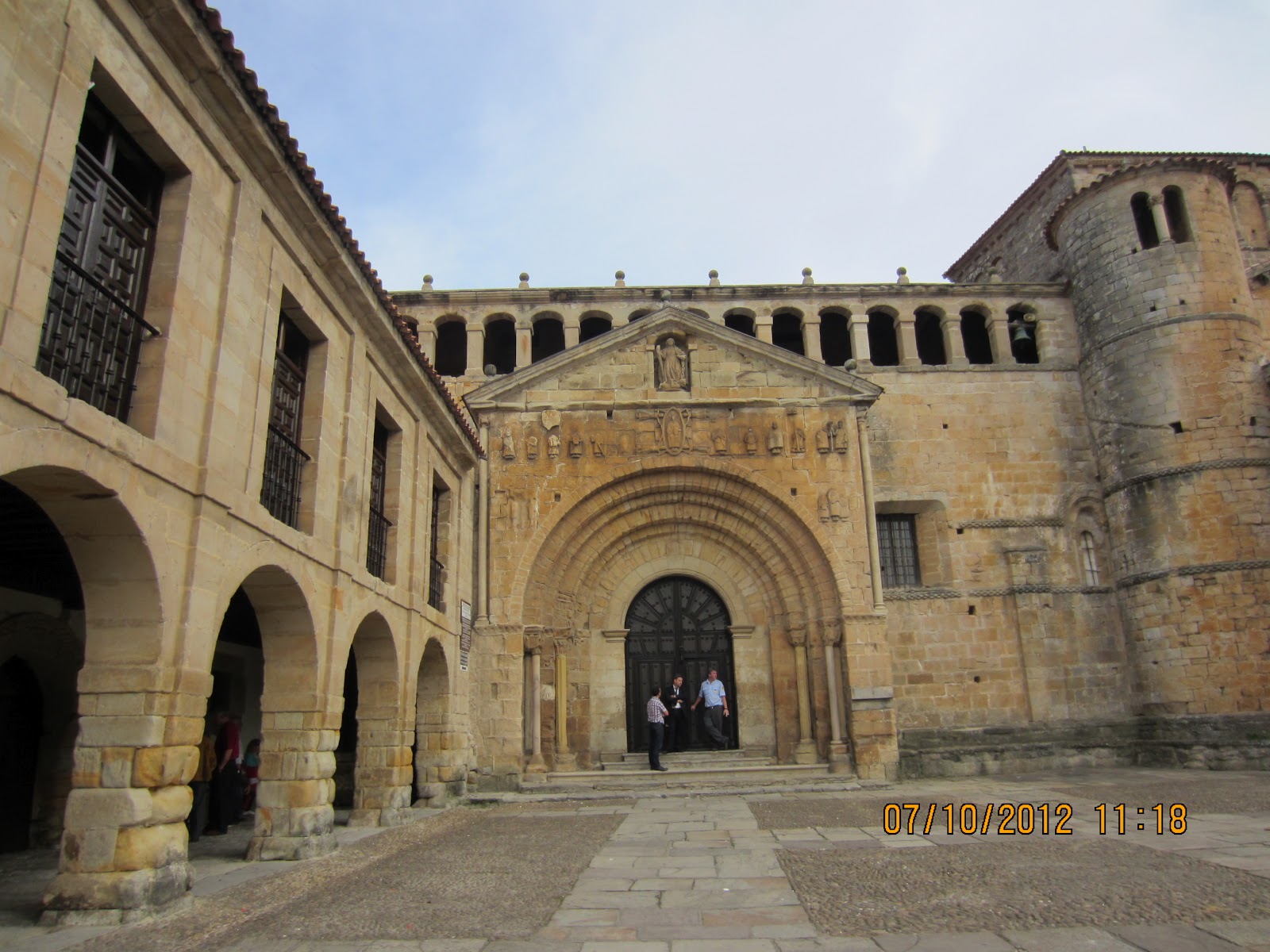
Not long after this we entered Llanes. Once again more evidence of the past wealth of this attractive coastal town. The camino took us past the harbour and into the historic centre. Joost decided it was lunchtime so I carried on towards the albergue. I should mention at this point that most of the guides (including mine) had listed the Youth Hostel in Llanes as a destination. However Joost's guidebook showed an albergue in a small hamlet just two kilometres further from Llanes in a place called Póo. I left Joost to enjoy his lunch and walked out past the ancient church (interesting portal - trust me ;0)) and out on the main thoroughfare, passing a beautiful old promenade shaded by ancient plane trees.
I passed more examples of these occidental houses built in varying styles and colours - each of them a testament to the power of their owner.
I was soon in Póo and found this lovely little albergue just short of the beach. A lovely sunny terrace and well tended garden. The clothes are hanging drying in the afternoon light, and I'm off shortly to find the one shop in town so that I can add to the uncooked pasta I've been carrying these past three days. I'll be 'eating in' this evening :0)
I've had such good luck with the weather on this walk. Yesterday was into the low thirties by midday, and although today started out overcast, after a few spots of rain around midday (that weren't even sufficient to consider donning waterproofs) we walked through Llanes in almost 30 degrees. The forecast for the next days is good, although obviously the weather tends to change very quickly here on the coast. All in all though a marvellous stage today, despite the diversion along the main road. I did have a thought for those walking this camino in a couple of years' time, when this new motorway will be open and this beautiful coastal walk will have to be undertaken within earshot of the lorries and cars on the motorway.
Anyway folks, that's it for today. I kept the distance under 30km (after the long stage yesterday) and my feet will appreciate the rest. It's a bit early to be certain but it's currently looking like Joost and I are going to be the only pilgrims here today. Mind you - one thing one learns is that the camino is FULL of surprises. Let's hope they're nice ones :0)
This was a stage that started out well, got quite boring and ended extremely well. I'll explain:
Last night was enjoyable. Having showered and done the necessaries I returned to the bar to use the wifi. My efforts took me up to mealtime, so I shut down the laptop and went into the restaurant. I'd been told he offered a "pilgrim special" and was happy to accept whatever he offered. This turned out to be a good decision.
I chose Favelas Asturianas for starters - a dish of large white beans in a rich tomato sauce, with various cuts of meat added - such as strips of loin of pork, local black pudding and so forth. Main dish was Merluza a la Romana - fresh white fish in batter with salad. Wine was included.
Shortly after I sat down to eat two pilgrims entered. I'd passed them earlier in the day, and having chatted a bit we sat together for our meals. They were a young Polish couple from London, thus naturalised English. We chatted and ate and toook full advantage of the free wine!
I set out early the next morning. Now that the sun is rising slightly later each day I found a bar and had a coffee while I waited for daylight. I then set off around the town in the growing dawn and managed to see a fair number of these impressive houses that have been built throughout these coastal towns and which represent the wealth of the 19th century Spanish traders in central America.
I headed out of town on the footpaths, looking forward to a day of coastal views. About five or six kilometres into the walk I was directed down off the hillside route and onto the main road. The reasons soon became very clear: a new motorway. Oh dear!
While I understand that such constructions are somewhat inevitable, the contrast feels especially poignant when one is walking for hours each day. Suddenly there doesn't seem to be quite such a rush to get somewhere. So while I can accept that someone has identified a need for more motorway, it left me wondering - as I saw the huge scars into the sides of the mountains - quite why humankind seems so utterly bent on trashing every last piece of the natural world.
My walk had suddenly become more perfunctory than enjoyable. I walked alongside a busy main road for the next hour and a half before, mercifully, the camino then swung right into the small (but architecturally rich) village of Pendueles. An interesting church, an unexpectedly imposing crypt in the cemetery, and a badly decaying palace alongside further examples of the past wealth of this area. The palace in particular bore evidence of the great age of iron construction. Just as in the bridge at Portugalete, it seems that modern methods were quickly adopted for large buildings. Today there are the rusting remains of what was once a palace.
As I left the village and found the coastal path, that wandered up and down and along the pretty coastline, I bumped into Joost once more. He had stayed about 2km from Colombres in a private albergue. We walked together, enjoying the increasingly impressive views as we rose above the coast and could see the Bay of Biscay framed against the flanks of the Picos de Europa.
The camino was now following another GR graded footpath - the markings are identical to those in France. We wandered along the coast, the path climbing and descending. Llanes came into view, another beautiful setting for an historic town beside the sea. We walked past a golf course and as the path began its descent toards Llanes we passed the small chapel of Santo Christo del Camino.
Not long after this we entered Llanes. Once again more evidence of the past wealth of this attractive coastal town. The camino took us past the harbour and into the historic centre. Joost decided it was lunchtime so I carried on towards the albergue. I should mention at this point that most of the guides (including mine) had listed the Youth Hostel in Llanes as a destination. However Joost's guidebook showed an albergue in a small hamlet just two kilometres further from Llanes in a place called Póo. I left Joost to enjoy his lunch and walked out past the ancient church (interesting portal - trust me ;0)) and out on the main thoroughfare, passing a beautiful old promenade shaded by ancient plane trees.
I passed more examples of these occidental houses built in varying styles and colours - each of them a testament to the power of their owner.
I was soon in Póo and found this lovely little albergue just short of the beach. A lovely sunny terrace and well tended garden. The clothes are hanging drying in the afternoon light, and I'm off shortly to find the one shop in town so that I can add to the uncooked pasta I've been carrying these past three days. I'll be 'eating in' this evening :0)
I've had such good luck with the weather on this walk. Yesterday was into the low thirties by midday, and although today started out overcast, after a few spots of rain around midday (that weren't even sufficient to consider donning waterproofs) we walked through Llanes in almost 30 degrees. The forecast for the next days is good, although obviously the weather tends to change very quickly here on the coast. All in all though a marvellous stage today, despite the diversion along the main road. I did have a thought for those walking this camino in a couple of years' time, when this new motorway will be open and this beautiful coastal walk will have to be undertaken within earshot of the lorries and cars on the motorway.
Anyway folks, that's it for today. I kept the distance under 30km (after the long stage yesterday) and my feet will appreciate the rest. It's a bit early to be certain but it's currently looking like Joost and I are going to be the only pilgrims here today. Mind you - one thing one learns is that the camino is FULL of surprises. Let's hope they're nice ones :0)